From the Newsletter
There Is No Number One


A SUNROOF IN WINNETKA
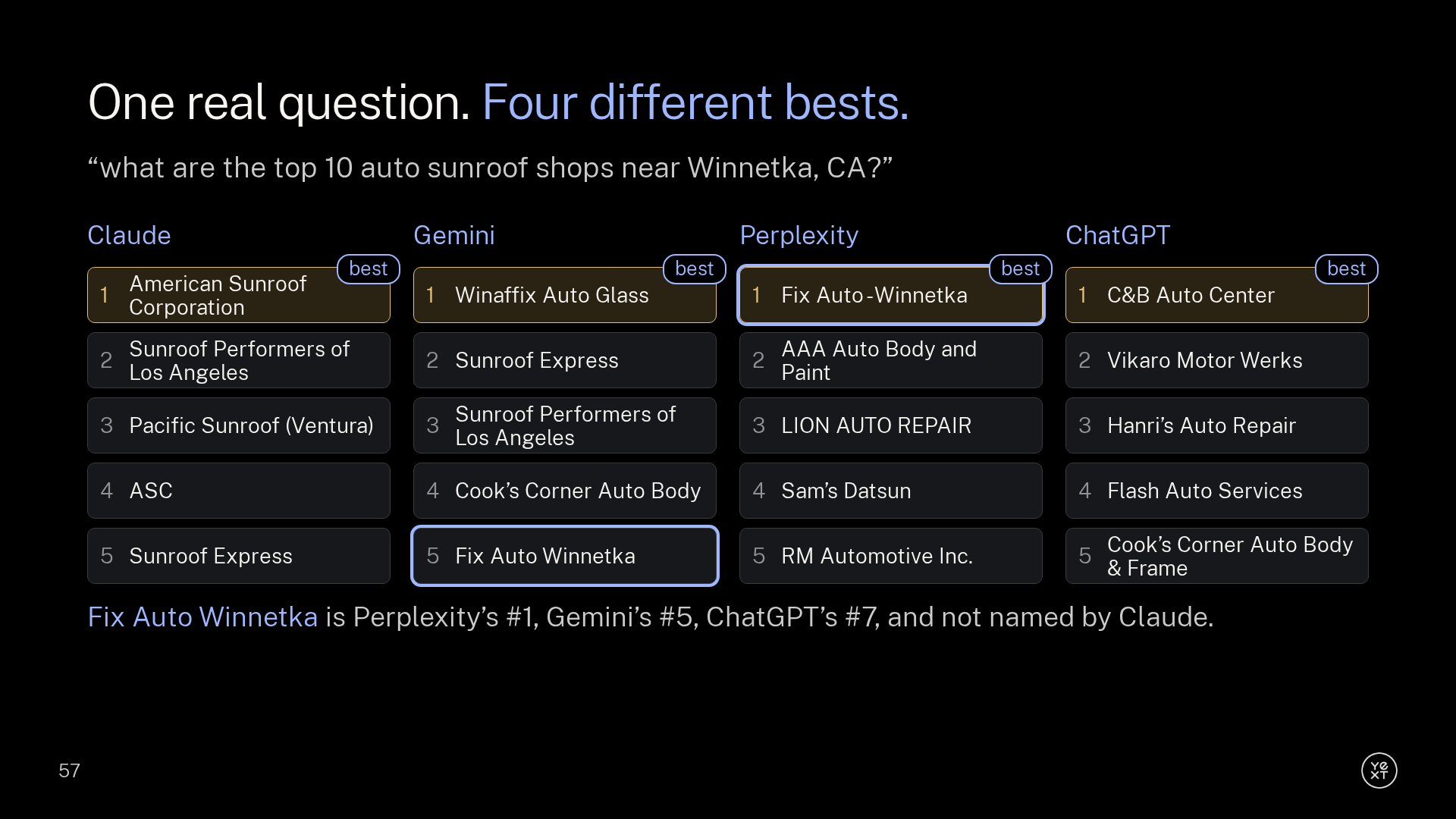
One of the questions in a Yext Research study asked four AI engines for the top auto sunroof shops near Winnetka, California.
Claude put American Sunroof Corporation first.
Gemini's top pick was Winaffix Auto Glass, Perplexity's was Fix Auto and ChatGPT's was C&B Auto Center. Fix Auto, Perplexity's number one, came in fifth on Gemini and seventh on ChatGPT. Claude never named it at all.
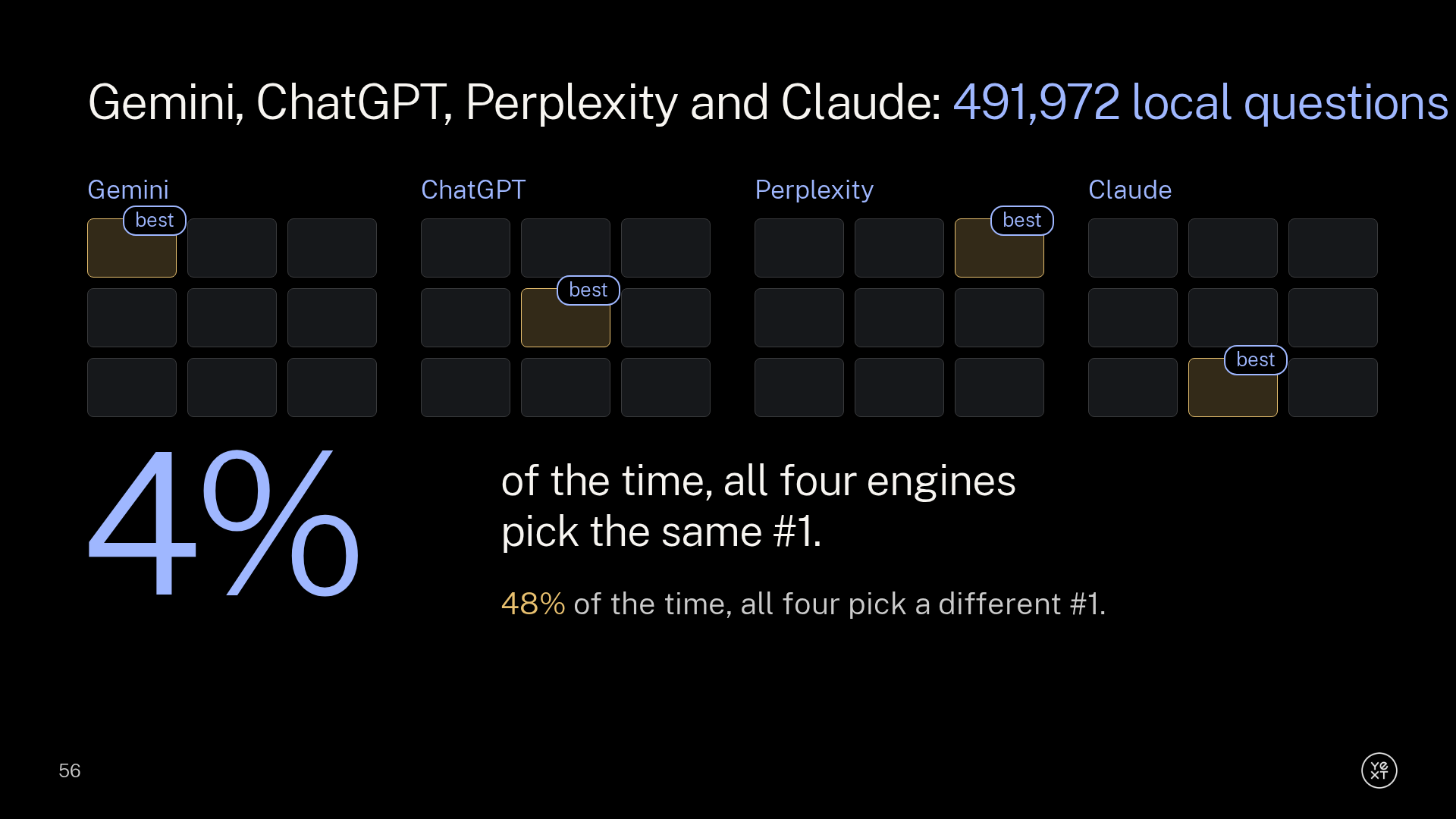
My colleague Anthony Rinaldi ran that study. I'm Yext's Chief Data Officer, and we publish our research at yext.com/research. We asked Gemini, ChatGPT, Perplexity and Claude the same 491,972 local questions between February and August 2026.
All four picked the same number one business 4% of the time. In 48% of the questions, all four picked a different number one.
Exa just put 211 million places in front of AI agents. More places give every engine more to choose from, and the business that gets named is whoever each AI happened to understand.
For a local business, there's no number one anymore, because the engines rarely agree and each of them keeps learning about the person asking.
WHAT I SAID IN MARBELLA
On October 12, I gave the keynote at SIINDA's conference in Marbella. The talk was called “Search, AI, Context, & Memory. Redefining What Best Means.” SIINDA is a European non-profit association that connects local search companies from around the world.
I built part of the talk around James P. Carse's 1986 book Finite and Infinite Games. In Carse's terms, a finite game is played to win, and an infinite game is played to keep playing. Classic search was a finite game, with a fixed board and known players, and it ended when you picked a link.
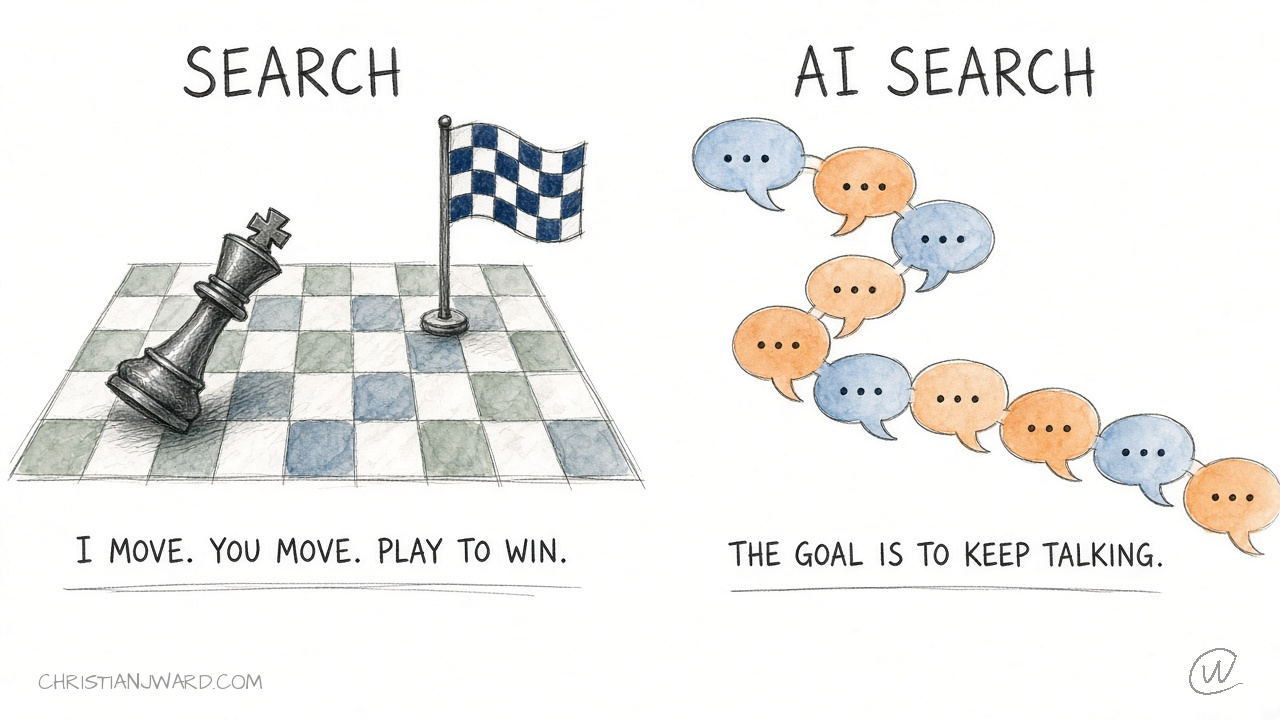
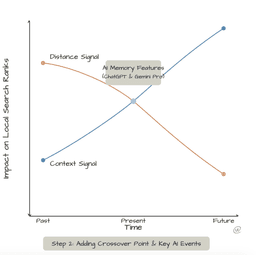
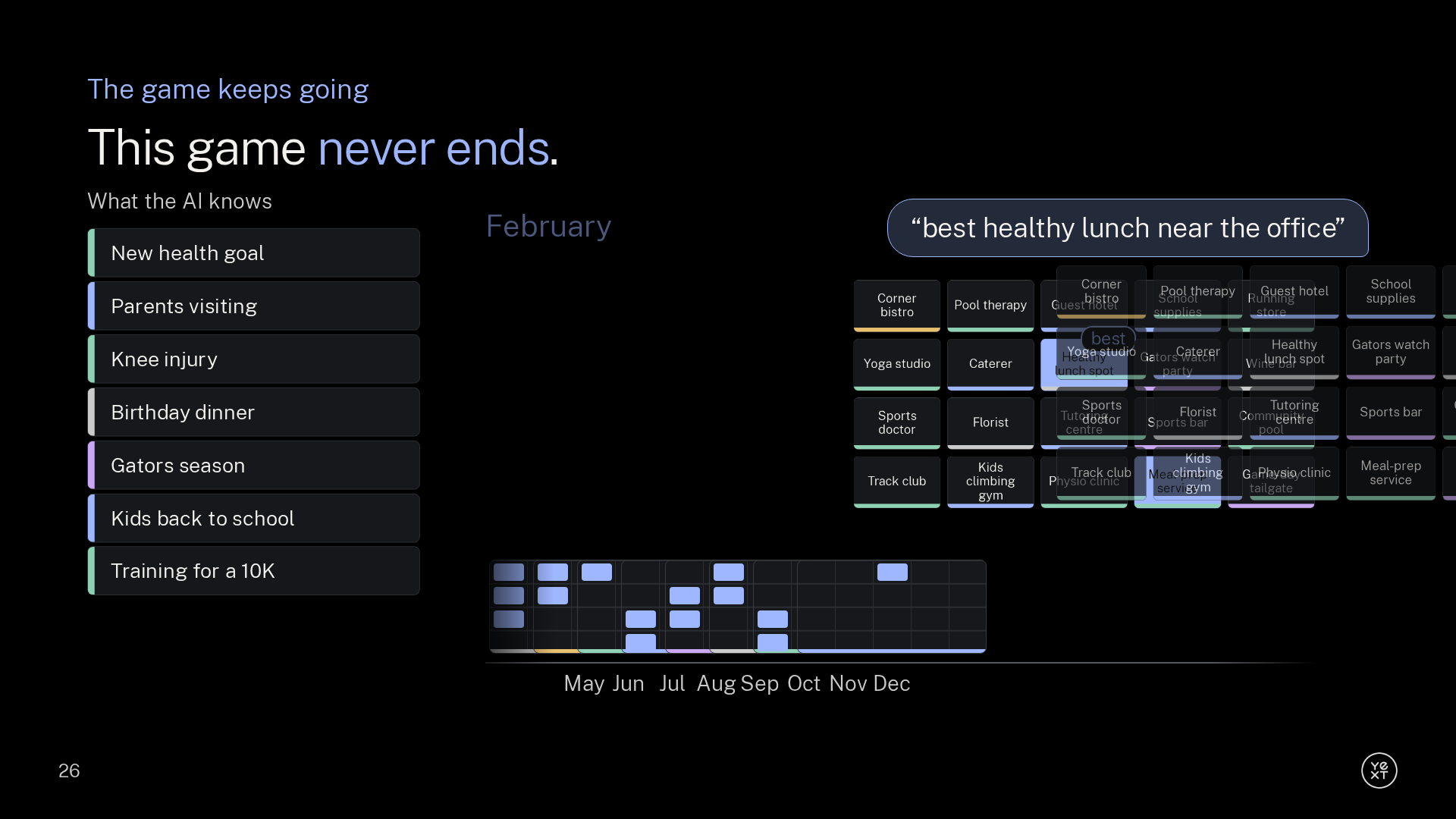
AI search keeps going. The board rebuilds for every person, every time they ask a question, and it keeps changing as the AI picks up more context and memory about them.
I showed it with Guess Who, the same game I first used at SIINDA in 2021. Each thing a person shares with an AI, like a health goal or a trip to Spain, changes the board before the question arrives. On stage, I played that out over a year, and one person's board turned over every month as the AI learned about things like a training plan or a knee injury.
Number one moves even without personalization. Mark Kabana and I compared 21,070 paired AI rankings in our August study, holding the request and the place fixed and checking the same engine each time. At the next check, 1 to 14 days later, 21.7% of the first-place names were lower.
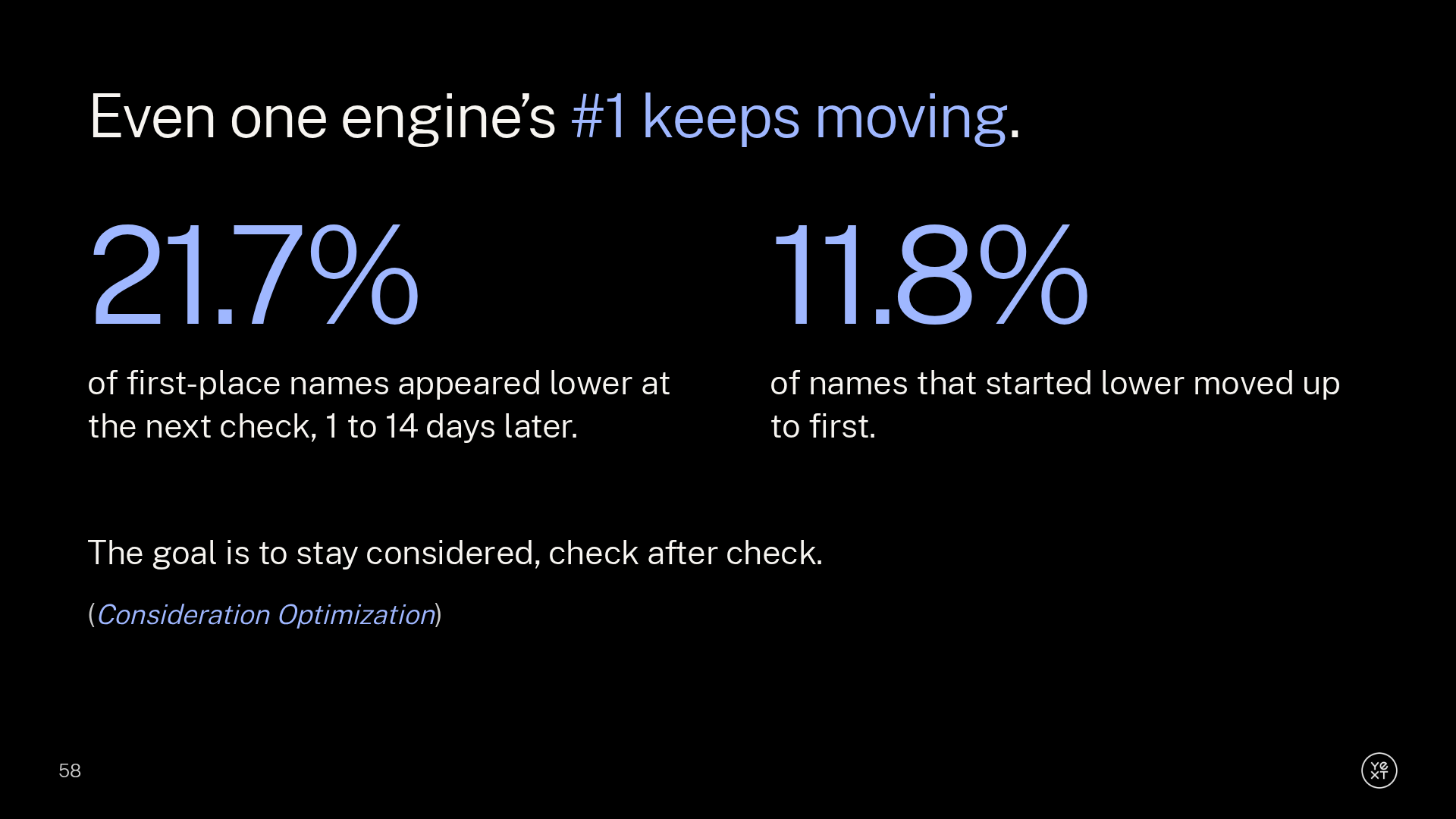
The goal is to stay considered, check after check, in every engine. We call that Consideration Optimization.
THE WORLD IS WAKING UP
Off stage, I talked with directory and media companies from all over the world.
One of those conversations was about privacy, and how people say they care about it and still share their data when the value exchange is high.
That gap keeps the board changing. What a person shares with an assistant becomes context, and some of that context becomes memory that shapes the next answer. Assistants now carry what they learned about you from one session to the next, so what gets cited today shapes what gets recalled next week.
The conversations in Marbella tell me the world is finally waking up to the new normal, where all the data matters.
That includes facts as small as in-store pickup. In another Yext Research study I presented in Marbella, 73.23% of eligible locations recorded in-store pickup as Yes, and pickup came up in 11.05% of AI answers about those locations.
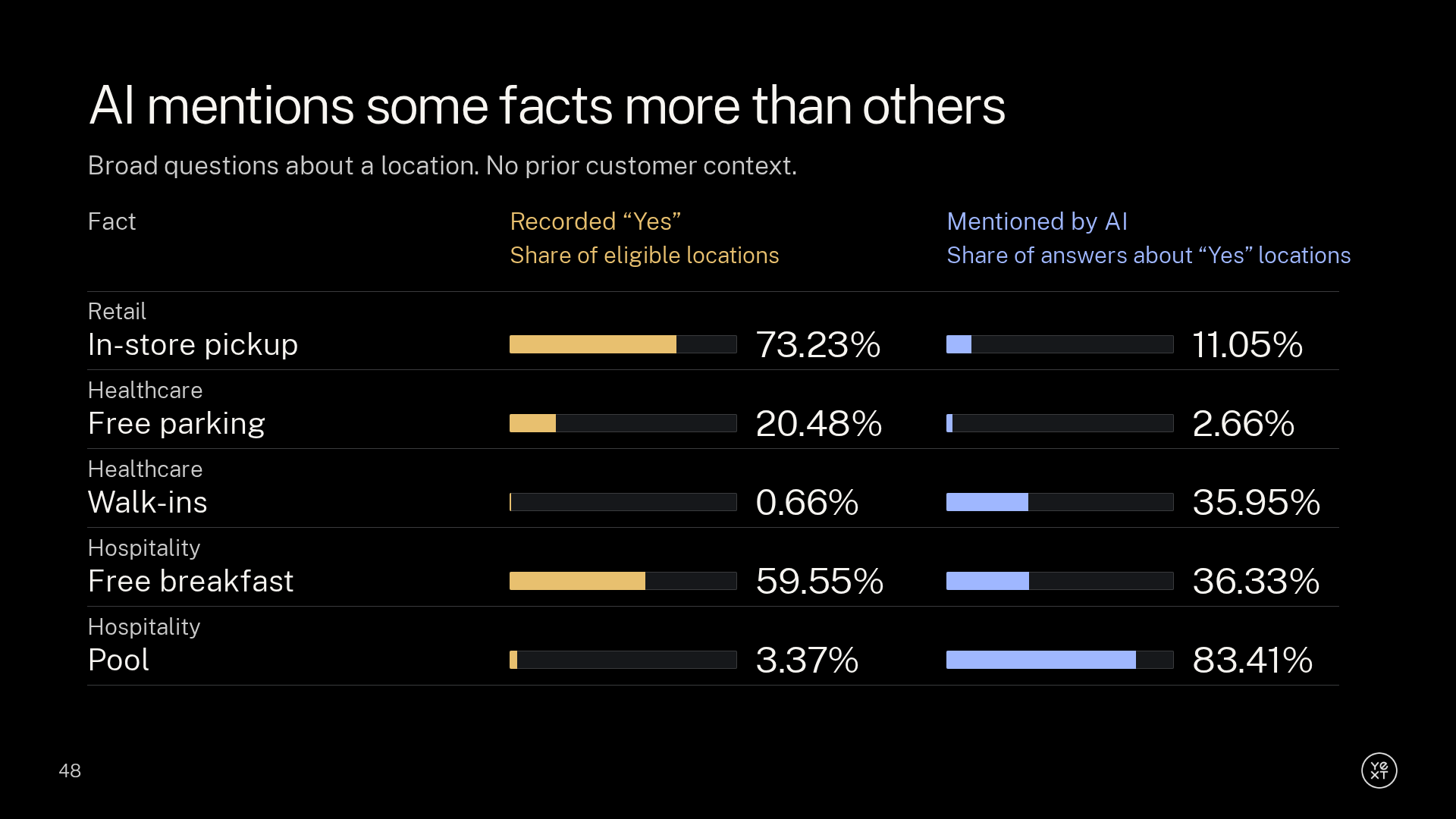
We gave the AI no personal context in that study, so it measures what a broad answer mentions on its own. Once a person shares more, context changes which facts matter to them, and a business can be the right fit because of a fact the broad answer never mentioned.
WHAT THE ENGINES READ
Showing up in AI answers is still search engine optimization (SEO), now running across new surfaces, and the fundamentals carry over. Retrieval is where it starts. Once results come back, the model reads everything around them and has to decide which facts to trust.
The model leans on sources that agree with each other.
A business with clean, consistent facts on its own site and everywhere else it shows up gets repeated, and one with conflicting hours or an old menu gets passed over.
Microsoft's guide to answer engine optimization and generative engine optimization puts first-party data at the center for retailers, and Yext Research points the same way. When all four engines agreed on a top business, that business's own website was among the cited sources 91% of the time. It's a share of the winners, measured after the fact, so it can't tell you how often a website alone wins.
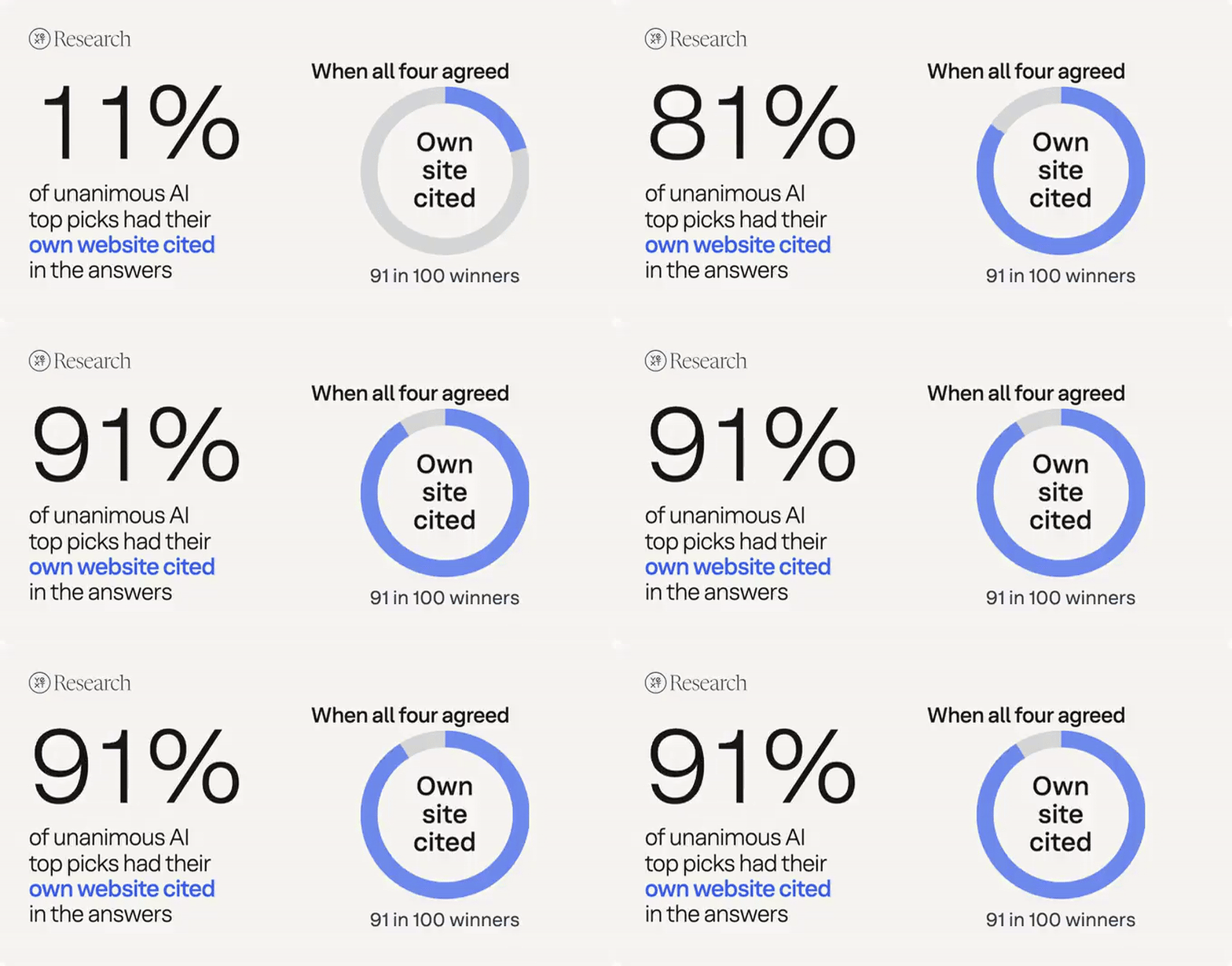
Third-party mentions help a model find you, and your own site is what it checks before it names you.
When the basics there are current and match what the rest of the web says, the model has a consistent answer to repeat.
Different assistants also trust different sources at different moments.
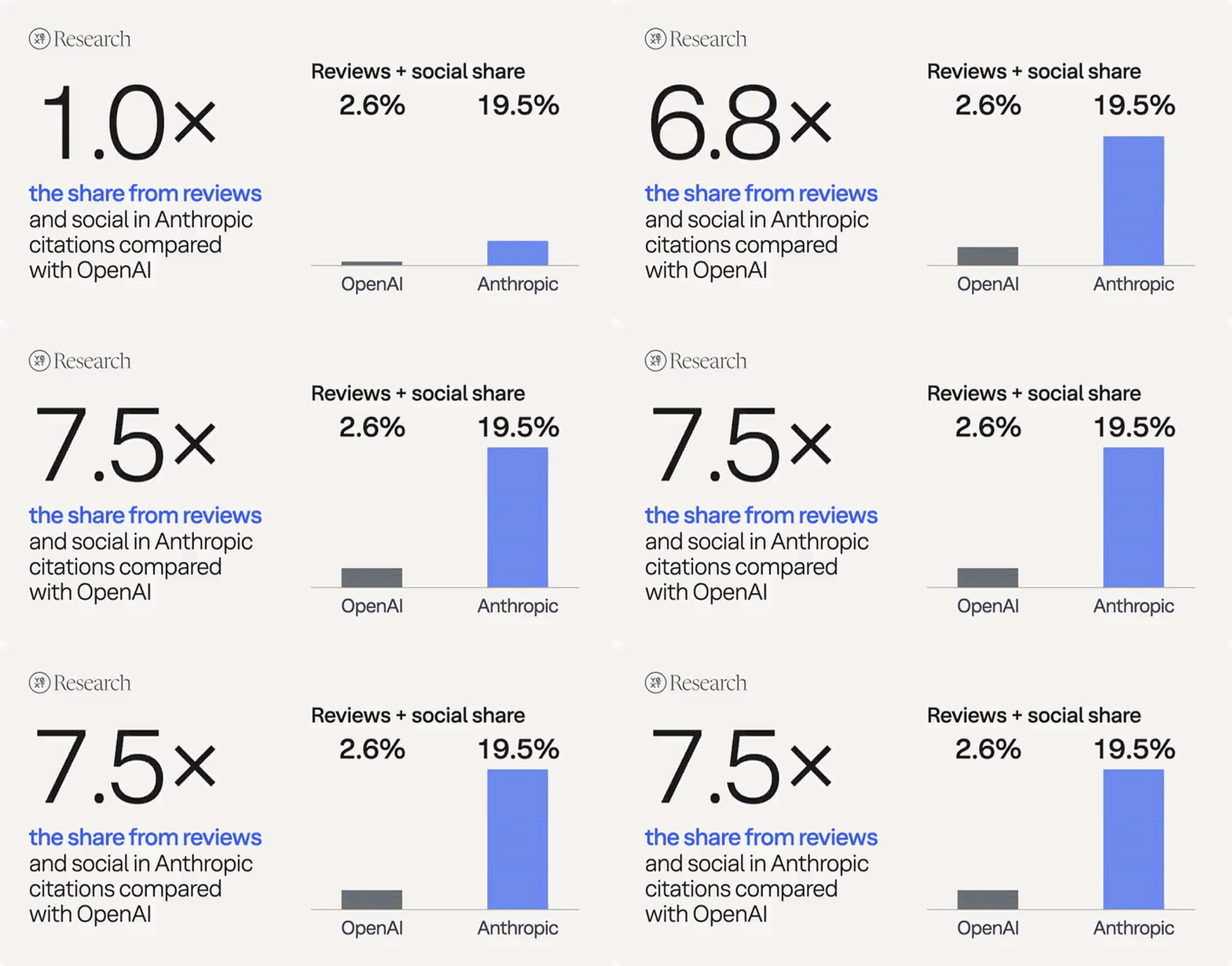
A separate Yext Research report looked at questions grounded in a location. In the first quarter of 2026, Anthropic drew 19.5% of its citations from reviews and social, against 2.6% for OpenAI, so Anthropic's share was 7.5 times OpenAI's. That compares shares inside each engine and says nothing about total citation volume or which brand gets recommended.
The mix also changes with intent. Early research questions pull from articles, and the sources shift toward local details and the business's own pages as a person gets closer to buying.
THE QUESTIONS ASSISTANTS GET
Assistants get asked practical, local questions.
Is it open right now?
Do they take my insurance?
Is there parking?
Which location is closest?
Can I book today?
A model can only answer those confidently if the facts are written down somewhere it trusts. In Yext's matched analysis from February to August 2026, location pages were associated with a 2.9x lift in being named by AI. The report doesn't publish its full lift model or controls, so I read 2.9x as an association and wouldn't promise it to anyone adding a page.
A page for each location that spells out its hours and services, plus the parking and contact details, gives a model something it can trust.
WHERE TO START
Tactics can't overcome bad data.
A tactic aimed at one engine's top spot needs that spot to hold still, and in our data it moves within days.
Each engine decides which facts to trust from whatever it can read about you, so the work is getting your facts out at scale, in real time, everywhere possible through data distribution.
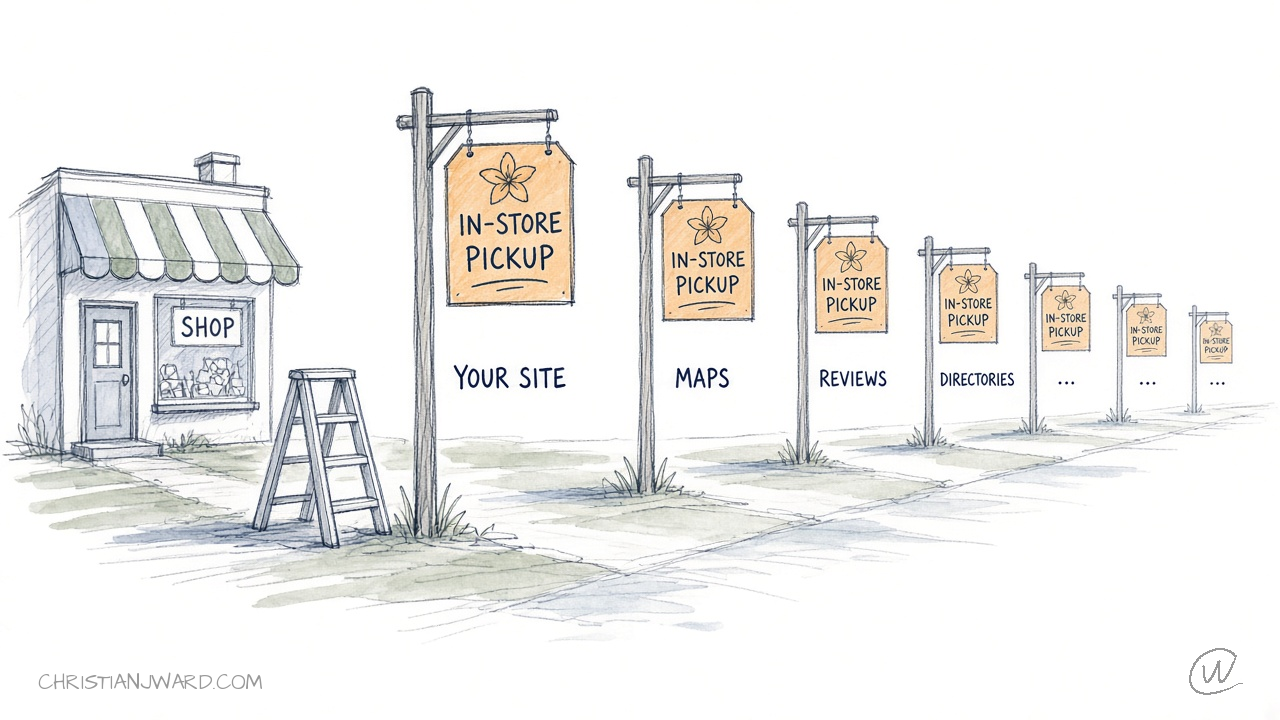
Start with an audit of the facts you publish, location by location. Compare what your website and business profiles say with what each location actually offers, down to small attributes like in-store pickup that only come up once a person's situation calls for them.
Then distribute those facts everywhere AI reads. Your own website comes first, given that 91% figure, and the same facts need to reach business profiles and directories, plus the review sites and social channels that some engines lean on far more than others.
Keep them current in real time, because every answer gets generated fresh.
When something real changes at a location, that change has to reach every one of those places as it happens.
And measure which engines name you.
Ask Gemini, ChatGPT, Perplexity and Claude the questions your customers ask, from the places they ask them, and track each engine separately, since they rarely agree. Check again within days, because first place can move that fast.
Get More Where This Came From
What I learned this week and new writing, sent to your inbox. AI frameworks and data strategy for people who have to make the call.