From the Newsletter
What my AI does between conversations

Listen to this post (read by Christian)
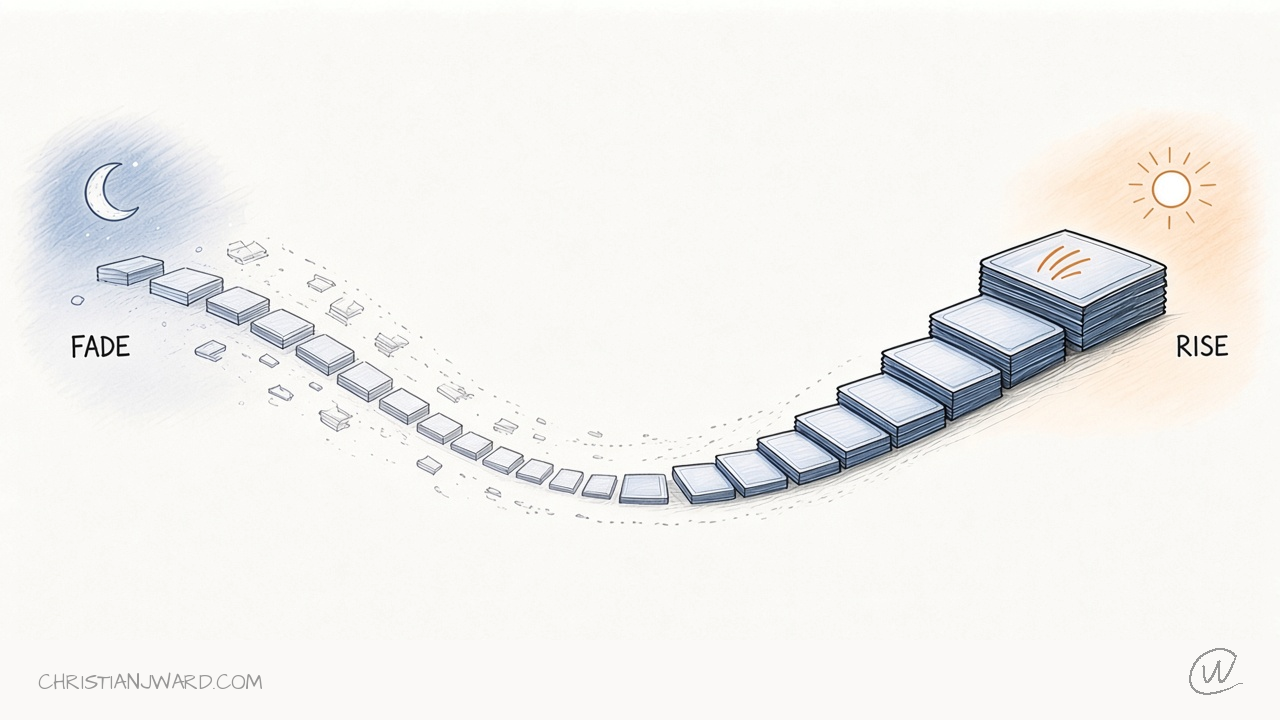
It keeps working after I stop talking to it.
DREAMING
Last week Anthropic published an engineering post by Lance Martin called The components of agent memory. It walks through what is often called dreaming, where an agent uses idle time between interactions to organize its memory "by reflecting on logs to fix mistakes or produce new notes and representations."
I replied that dreaming is an interesting way to think about a lot of what I've been building with lesser models. I also pointed to Wil Reynolds and Will Scott, who have both done some really interesting dreaming cycles with meeting transcripts and their second brains.


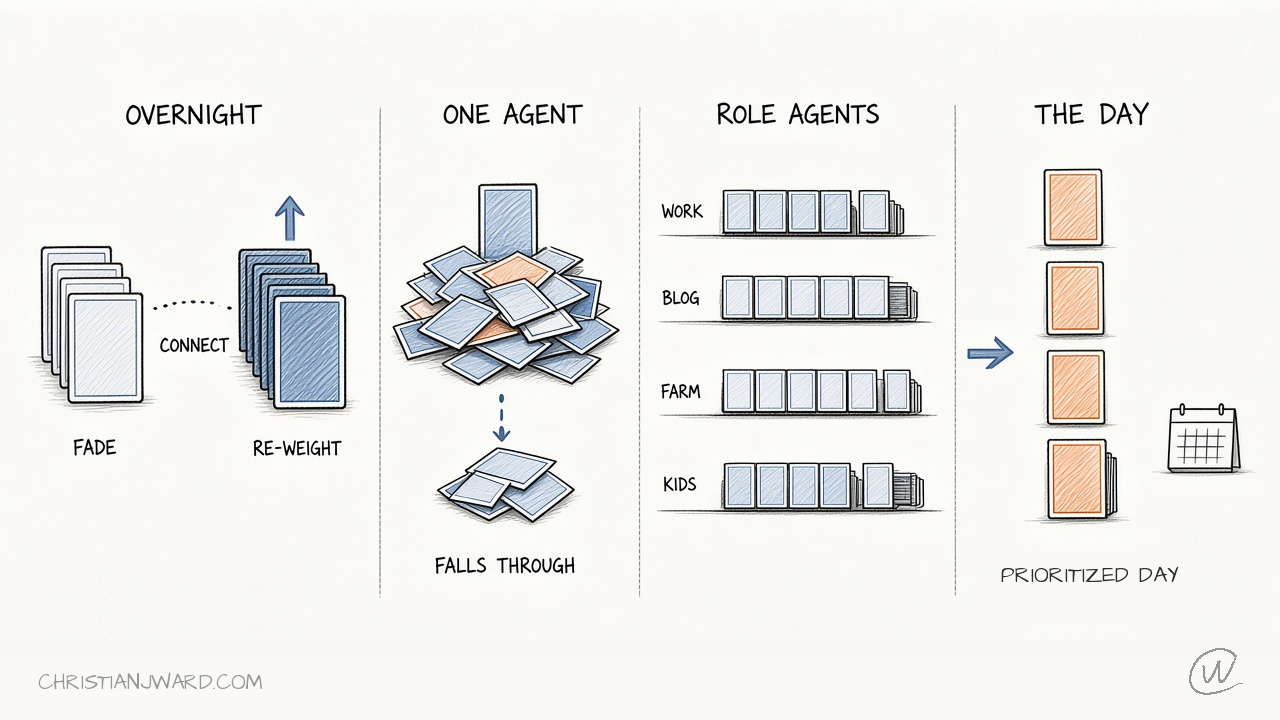
The whole dreaming thing is an interesting analogy. The idea is that every night the AI goes through and decays certain memories and activities that do not appear to come back up, and then weights other memories a little more, so they appear more readily. Like the things you remember when you first wake up from sleeping.
It's a way to think about prioritization of data through time.
FROM ONE PROJECT TO ANOTHER
This week I've been working on a series of explainer videos for Yext Research that are designed to simplify what our findings mean.
I find that as our team moves with more velocity in producing better content, it doesn't necessarily help the market understand, because not everybody can sit and read a seven-page research paper on the relationship between AI search and perfect data.
In that process, I realized that I could also use this for another project, Corvo. The AI was able to connect all of the tools and information from one project to another, and within an hour I had what I think would've cost me 2 to 3 months of time with designers, videographers, marketers, et cetera.
It was pretty unbelievable.
BEFORE I ASK
I think we're getting to where I'm comfortable having AI act and perform even when I'm not engaging with it.
There are a lot of questions about whether it should be running things in the background. If you have a premium plan with excess bandwidth, I kind of see no reason not to have it doing things and preparing things before you even ask it to.
I've started that with the compilation of my notes and the improvement of my own personal knowledge graph every night.
At Notion, Ivan Zhao wrote last week in The Next Era of Notion that roughly half the pages in Notion are created by agents, and that "our own agents keep that context up to date for people and other agents."
ONE JOB PER AGENT
I am a little concerned about one part of the dreaming. If you have one agent doing all of the dreaming and re-prioritization, you end up losing some of the focus.
That's one of the reasons why Grok Bots, and now Claude Duet from Anthropic, are trying to have role-based agents. Anthropic's post says an assistant like Claude Duet "often benefits from having memories that are organized around the person it’s helping, and dreaming can be tuned to build memory in service of a particular goal."
If I'm talking to my kid's swim coach about swimming, it makes sense for the AI to listen to them and to bring those things back up. If that conversation is muddled with every other AI conversation I have about work, my blog and the farm, it's very clear that certain things are gonna fall between the cracks.
EVERY SINGLE DAY
When I think about what I want waiting for me on a Monday morning, it's a well-prioritized day ahead. I want that every single day.
Everyone's trying to build this, and it doesn't work right yet.
WHAT IT SHOULD SURFACE
The other thing my AI should be doing is monitoring for content that is ideal for me right now.
Today those controls are set by X, Facebook and the other social media companies. They control the algorithm of what you see.
I'm looking forward to the day when my personal AI is curating things based on the topics and discussions I had in the prior weeks. It would also be aware of things like the holidays and travel and my calendar and meetings, and it would surface the things that are important.
Get More Where This Came From
What I learned this week and new writing, sent to your inbox. AI frameworks and data strategy for people who have to make the call.