From the Newsletter
The Data-UI Pendulum
Marketing's Full Circle Journey

The pendulum swings back. Throughout marketing history, the relationship between Data and UI has been tortured.
Now, we've come full circle.
The Evolution of Digital Marketing
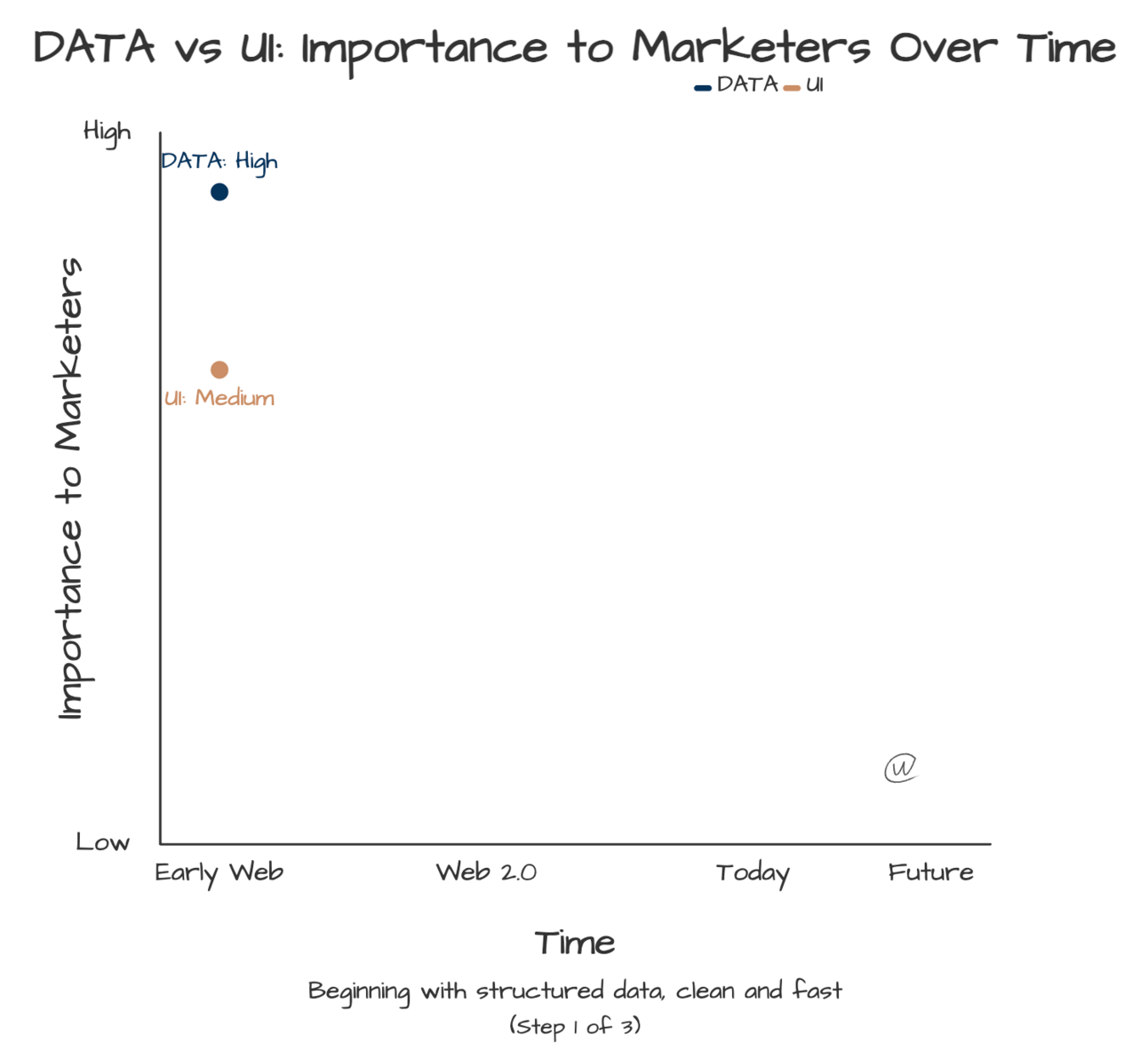
I'm old. I remember building my first programs in BASIC when the web was just emerging and Data was king. Structure mattered most, while UI took a backseat. Information trumped the presentation.
Websites were simple information repositories at the time. Content lived in basic HTML structures with minimal styling. Early digital marketers focused on organizing information logically rather than creating visually striking experiences.
The internet was text-heavy and database-driven. Marketing success meant having the information available, no matter how it looked.
The Great Inversion
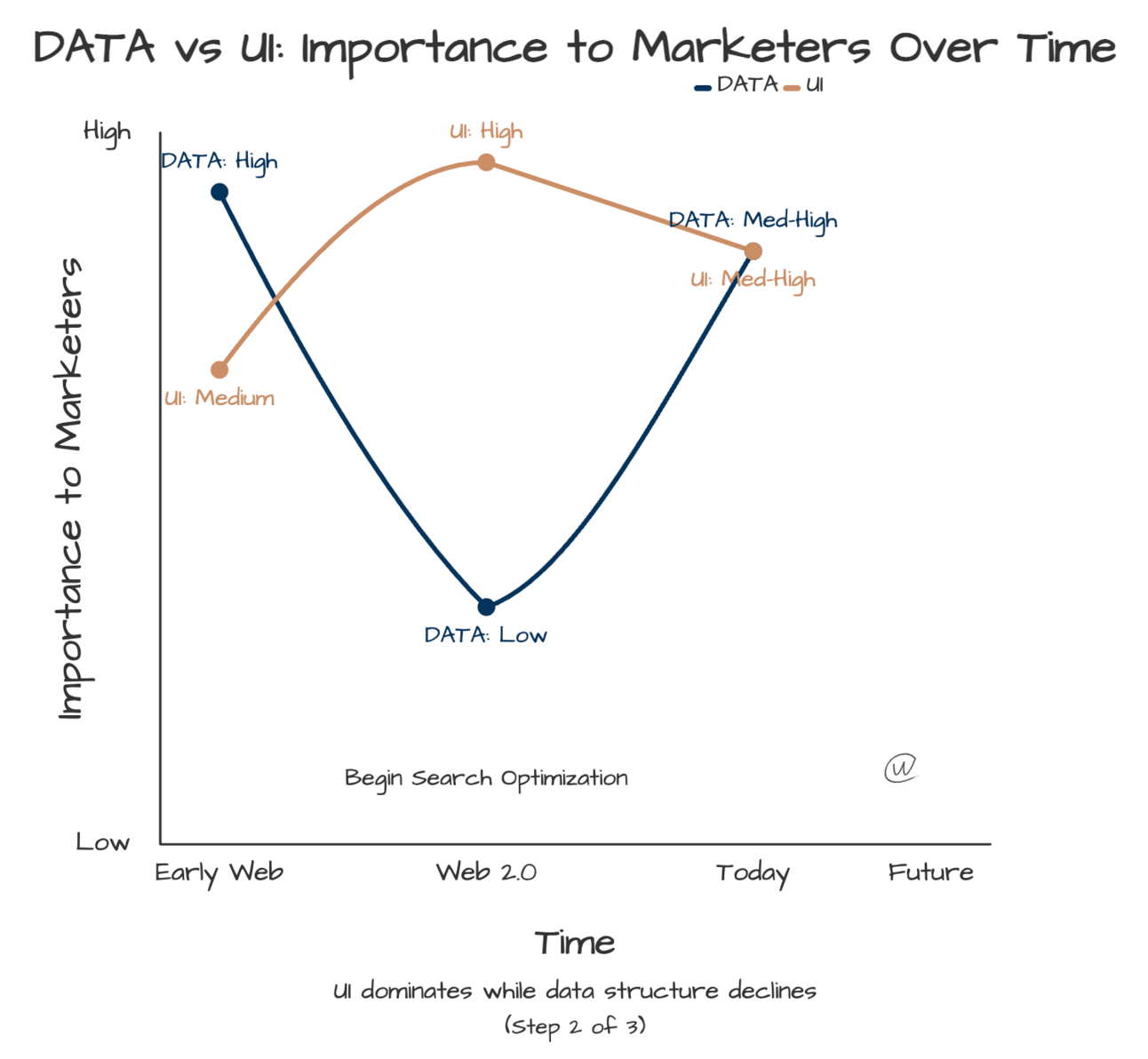
Then, Web 2.0 changed us. Suddenly, UI was all that mattered. Flashy interfaces and interactive elements were built to addict you to the platform.
Remember Flash websites?
Data importance plummeted as marketers chased engagement through aesthetics.
That shift changed how businesses approached digital marketing. Companies invested heavily in design teams and UX research. The goal moved from informing to engaging.
Marketing budgets were reallocated toward visual assets and motion graphics, and sites became immersive destinations rather than information resources.
It didn't stop with Flash, either. People kept gravitating toward UX design over the years, especially once the iPhone launched. There was a restaurant app that spun a dial of food options to pick where you'd eat. Games figured out how to use the accelerometer. That didn't last.
There were so many experiments with UX and UI, and it was a cool time. But in the end, none of it really made dashboards or interactive questions of data any better.
Search optimization created a strange middle ground where both elements mattered but neither dominated. We built for algorithms AND humans.
The AI & Machine Learning Inflection
Today, we stand at an inflection point, the AI & Machine Learning stage.
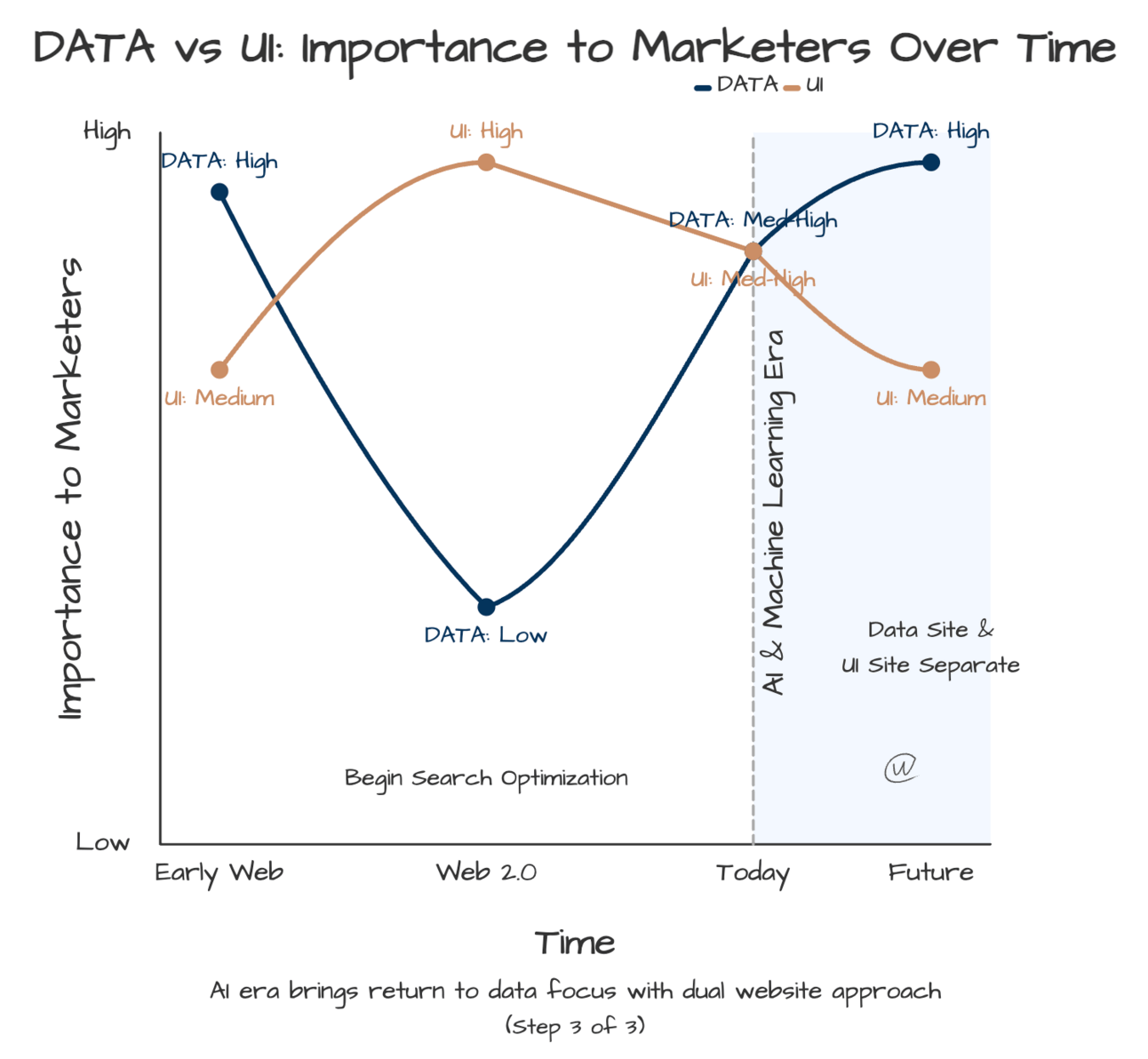
We're watching Data return to prominence while UI importance gradually declines. UI still matters (!). The machines mediating between content and humans simply prioritize structured data over presentation.
Conversational interfaces don't need to be pretty if they have the correct answers.
That changes how marketers create and distribute content. When AI systems become the primary gatekeepers to customer attention, structured data becomes your most valuable asset.
This aligns with McLuhan's famous insight that "the medium is the message". As the medium shifts from human-first interfaces to AI-first interactions, the nature of our content changes with it.
This goes well beyond design trends. It's a structural change in how information flows between businesses and consumers.
The Bifurcation Strategy
In an AI-powered future, the logical conclusion is two separate sites. One is optimized for machines (Data-heavy), and the other is for humans (UI-focused) who reach the bottom of the funnel.
This is already happening. Some marketers are creating content repositories structured specifically for AI consumption, separate from their human-facing brand experiences.
There are a few bifurcation strategies worth implementing.
Develop a structured data layer specifically optimized for AI systems
Create knowledge graphs that connect your content semantically
Maintain your human-facing sites with strong UX but recognize their changing role
Test content effectiveness across both AI and human channels separately
It's worth looking at how your existing content performs when people reach it mostly through AI interfaces. Some pieces carry clear, structured information. Others are there for emotional engagement.
How much of your customer journey will soon run through AI systems instead of your own interfaces?
The Challenge of Balance
This bifurcation approach faces real obstacles. Many organizations lack the technical ability to structure data for AI consumption while keeping their human interfaces compelling.
Legacy content management systems weren't built to do both jobs. The tools that are great at beautiful human experiences often struggle with machine-readable structured data.
Marketing teams are still organized around Web 2.0, with creative and technical functions working in separate silos. That structure makes it hard to build a strategy where the two actually work together.
Cost is a barrier too.
Building and maintaining two separate but interconnected systems requires significant investment that many companies aren't prepared to make.
Preparing for the Pendulum
Marketers who understand this pendulum swing have an advantage. The visualization I'm sharing shows the pendulum moving through marketing history. It starts with the early data-dominant web, swings through the UI-focused period, and lands at our current inflection point.
The diagram builds through each stage, showing how the relative importance of data structure and user interface has shifted over time. It ends pointing toward the split.
Start by auditing your current marketing assets through this lens. Sort out which ones serve humans directly and which ones need restructuring for AI consumption.
Invest in people who can bridge technical and creative work. The most valuable marketing professionals will understand both data structure and human psychology.
Build partnerships with AI platform providers to understand how your content will be processed and presented. Knowing early how these systems work is a competitive advantage.
Rethink which metrics matter now. At key decision points, traffic and engagement may become less relevant than AI representation and conversion accuracy.
Looking Back
Looking back from September 2026.
The dashboards never got there. Now we can ask models to review entire databases and come up with much more beneficial outputs within seconds.
I think the split might be less about two sites, though. It may look more like one site for humans, and then real-time data connectors for the AI.
Real time is becoming so important for AI adoption and accuracy. That's what this split means.
Keep the human site good. It still matters to the people who reach the bottom of the funnel.
But put real effort into the side the AI reads. The pendulum has swung back toward Data, and this time the data has to be live.


